My Hero Academia Series Review – A True Shonen Superpower
To the average onlooker, My Hero Academia is as standard as anime get. It follows in a long line of popular shonen action series, including some of the most iconic franchises the anime industry has ever seen. Dragon Ball, One Piece, Naruto, Demon Slayer, these titans stand above almost everything else, and for a while, it was uncertain whether Kohei Horikoshi’s smash hit could rise to that same level. However, if you ask anyone who’s actually watched the series, those doubts are quickly scattered.
With its final season now finished, it’s easier than ever to appreciate what makes this show special. Its world is unique and fascinating to explore, its power system is one of the best of its kind, and its story about the power of ordinary men leaves a strong, lasting impression. There may be a few missteps in its midsection and a bit of bloat in its cast, but when it really counts, MHA delivers.
Don’t be dissuaded by the family friendly aesthetic. In a modern media landscape so often lacking in hope, this is a fantasy that anyone can appreciate.
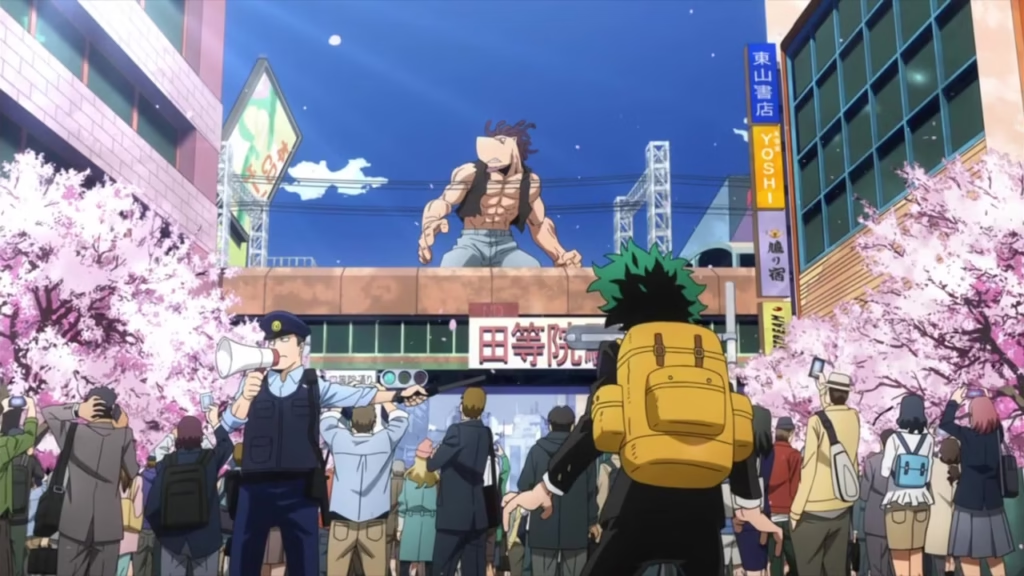
Izuku Midoriya, known by the nickname “Deku,” was a boy born with nothing. In a world defined by the emergence of “quirks,” superhuman abilities unique to their user, heroes and villains dominated popular culture. However, despite his adoration for both heroes and their powers, Deku was one of the unlucky few born with no power at all. But when an encounter with the hero All Might gives him a once-in-a-lifetime chance to gain a quirk, he embarks on a journey to realize his dreams at the premier hero academy, U-A High.
Right away, it’s essential to note how important that premise is to MHA’s success. While superheroes in anime have been done plenty of times before, the uniquely comic-inspired setting here lends it a strong sense of identity. You can feel the upbeat idealism pouring out from this world, and the influence of characters like Superman and Spiderman really shines through. It allows proceedings to feel consistently hopeful, even when delving into more serious subject matter.
Quirks as a concept only elevate this, making room for outlandish character designs and fun ways of expressing personality. Aside from exceptions like Deku, everyone has a quirk-based trait that makes them easily recognizable. Deku’s childhood bully Bakugo, for example, has an arrogant and explosive personality, and is thus given spiky hair and a quirk that literally generates explosions. Even background characters have small touches like this, further enhancing tone and variety.
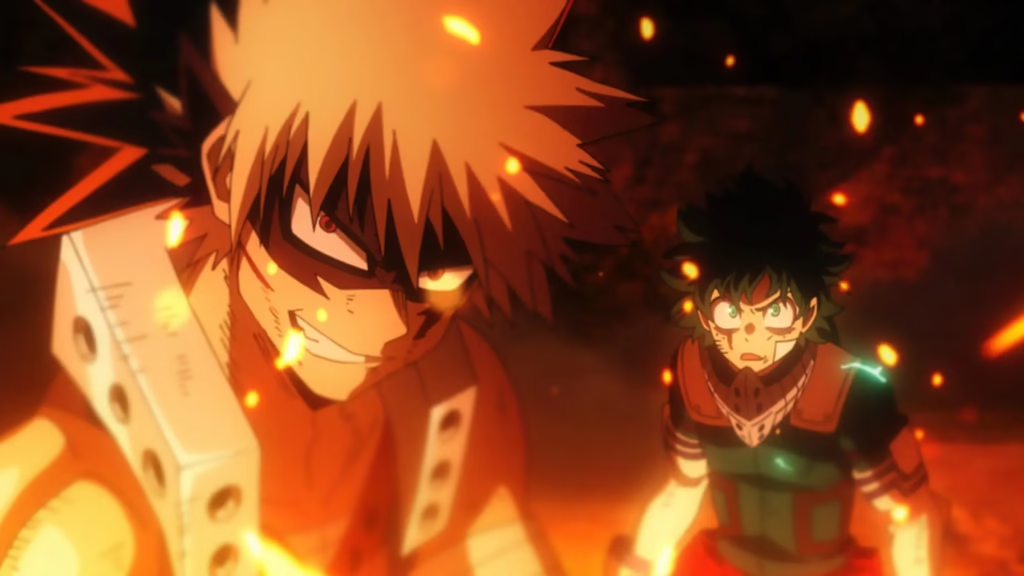
Bringing this to life is a great overall presentation. Simple, yet expressive art and vibrant colors mesh perfectly with the rest of the show, poppy and energetic while flexible enough to display heavy emotions when necessary. The animation is also very solid, with its high points being truly fantastic in the second, third, and final seasons.
However, sound is what really shines the brightest here. With an inspiring score by Yuki Hayashi, action scenes and dramatic moments are given gravitas that brings them to an entirely new level. “You Say Run,” the theme that plays as the heroes win the day, has become iconic for creating hype, and most of the series’ opening tunes are fantastic as well. I keep several tracks from the OST on my regular rotation, and would argue they stand head and shoulders above most of their contemporaries.
Voice acting is also a definite highlight. Just as with the visuals and music, these actors deliver the sort of eccentric, colorful performances I’d expect from superheroes. Having watched the series with both subtitles and dubbed English, I can confirm that each is great in its own right. Special props go to Justin Briner and Clifford Chaplin for their performances as Deku and Bakugo. Not since Goku and Vegeta have I seen a rivalry where I prefer English for both characters.
It is worth noting that across eight long seasons, there are a few dips in quality. The animation suffers near the midpoint of the show, mostly resulting in less fluid fight scenes and rushed-feeling cuts. These are most noticeable during the fourth and fifth seasons, but aren’t a major issue for the show overall.
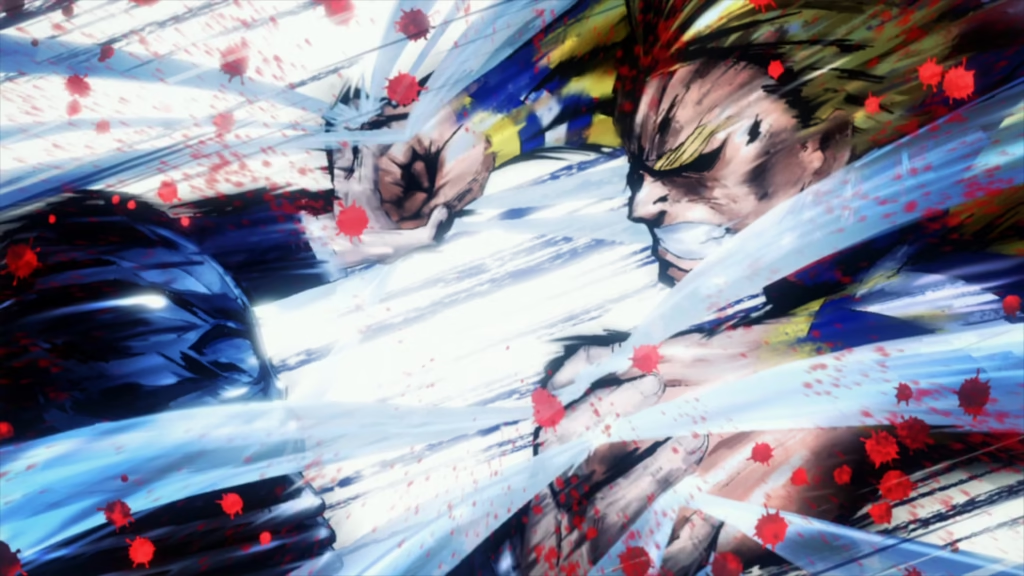
With premise and presentation both showing strong, it’s no wonder that the action would follow suit. Whether it’s saving civilians from villainous threats or the (surprisingly common) fighting among the students and teachers, there’s no shortage of creative spectacle. The variety of quirks goes far beyond the usual staples like super-strength or speed, introducing many concepts that I’m surprised I’ve never seen before. Manipulating gravity, hardening skin, frog-like physical traits, and slipping through walls are only the tip of the iceberg, and even familiar staples are given new coats of paint.
Watching quirks in action is an absolute joy, especially when they clash against each other. Strategy is essential for success as a hero, and when they are cornered or things get serious, seeing them figure out new uses for their powers is very satisfying. This is especially true for the hyper-analytical Deku, who’s inherited quirk “One for All” has a surprising number of secrets to uncover.
There are too many examples to list, but many of these fights rank as some of the best I’ve ever seen. In particular, All Might vs. All for One and Deku vs. Bakugo Part 2 are among my personal favorite scenes in anime, period. The intensity brought by the animation and music, the creativity of the powers, and the pitch-perfect tone and atmosphere bring them to a new height of enjoyment.
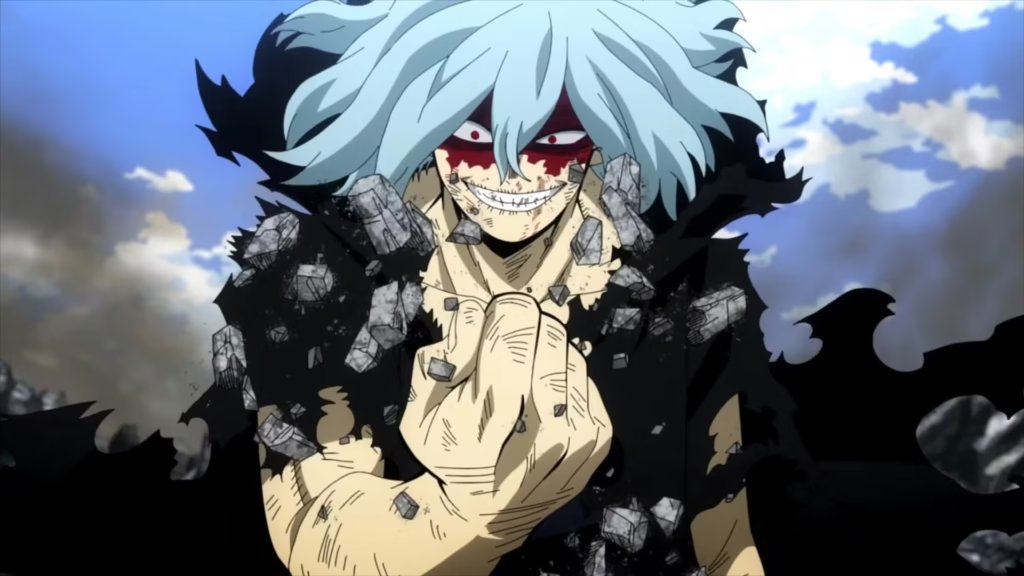
Of course, these scenes only work if the story at their core is solid, and thankfully, that’s not a problem. My Hero Academia is one of the most thorough and well-thought-out explorations of heroism I’ve ever seen. It examines not only what heroes are and why, but every aspect of their role and impact on a society. For example, All Might may be the iconic “Symbol of Peace,” but in a world full of problems that need solving, is it good to put the weight of them on just one man?
There are many interesting questions posed throughout the show, and without spoiling anything, the answers that follow are both uplifting and satisfying. It’s not often that a story sticks the landing quite as well as this, and while there’s a bittersweet tinge to the final season, it’s very fitting for the themes and underlying message of the narrative.
However, that doesn’t mean the story is flawless. After a near-perfect first three seasons, the show does wane in its pacing and plot writing. Main villains Shigaraki and All for One are set aside in favor of multiple smaller threats, and side plots are given more prominence. It’s nothing I’d call “bad,” but after multiple seasons of excellent pacing and buildup, it really did throw me for a loop.
I will not lie, at the time of their release, seasons four and five made me question if MHA had lost its touch. A lot of it felt like filler content despite very little of it actually being so. On top of that, the fan-favorite manga arc My Villain Academia was drastically shortened to fit within the filler, lessening its impact. Season six was thankfully able to get things back on track, but I know many people who fell off in the interim. It’s a real blemish on the series, even if the episodes themselves aren’t that bad.
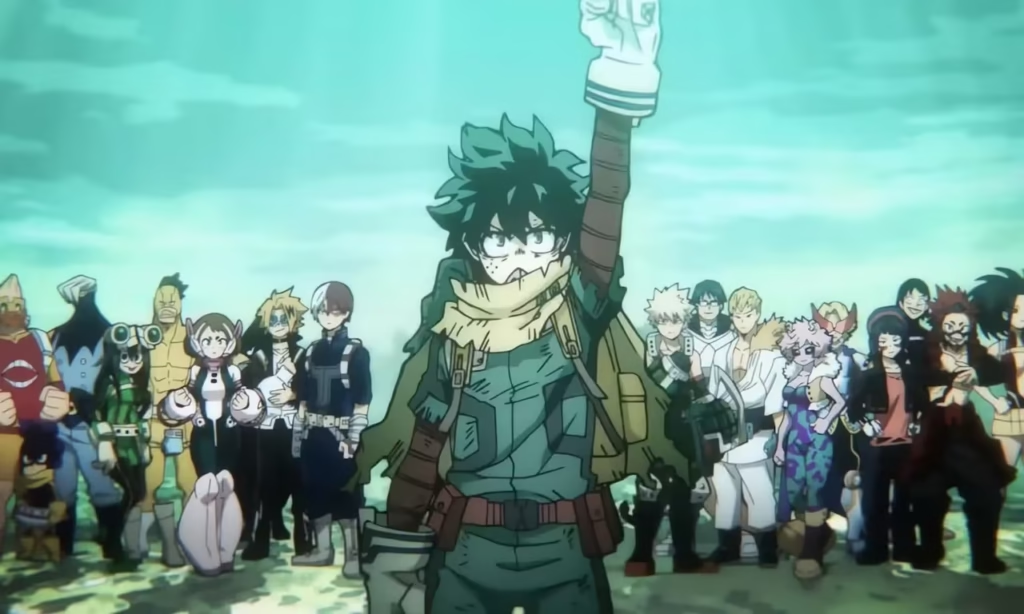
But even at its lowest points, the show never falls into being boring, and that’s because of its characters. This is one of the best casts in modern memory, with standouts that steal the show at every opportunity. Deku is fantastic as a protagonist, a truly inspiring figure as he grows from his humble beginnings, and Bakugo is my favorite shonen rival, period. All Might holds an almost mythic status both in the show and its community, transcending the “mentor” position to truly embody the term “superhero,” and there are countless enjoyable side characters to get to know. My personal favorites include Kaminari, Mirio, Dabi, Monoma, and Shinso.
The only real stumbling block is with character relationships. While some, such as Deku and Bakugo or Deku and All Might, are very well done, there are just too many characters to get attached to everyone. Class 1-A, the class Deku and Bakugo are a part of, has 20 notable students by itself, and that’s not to mention Class 1-B, students from other grades, students from other schools, teachers, pro heroes, villains, and the dozens of civilians that get involved over time.
That’s not to say they’re poorly written, and the quirk-based designs do a lot to differentiate everyone, but it’s an issue nonetheless. The narrative often tries to portray Class 1-A as a tight-knit group, but even after eight whole seasons of development, it still has members that feel like afterthoughts. Limiting the cast would have helped a lot, and given more screentime for those that remained.
Verdict
Honestly, it’s difficult for me to judge MHA through a critical lens. When it first premiered almost a decade ago, it was the show that made me an anime fan; my first real step into what is now a true passion. This world and its characters were inspiring to a level I’ve struggled to replicate since, and even if it had failed to keep it up, I would still be grateful for the joy it brought me.
But in the end, even when put through my harshest critique, I still love My Hero Academia. It’s a shining gem within the modern anime landscape, and an easy recommendation to anyone who wants a perfect gateway show. I may have my gripes with the mid-section, but those are partially due to the seasonal release schedule. With the ability to binge everything, sore spots are very easy to miss.
The below score represents my opinion as a critic, but in my heart of hearts, this show will always be a 10/10, and one of the most impactful pieces of media I’ve ever had the pleasure of watching. No summary feels more fitting than U-A’s famous motto: “Go Beyond, Plus Ultra!”